
Research

Photo © Dave Kellam
Berliner Förderprogramm Künstlerische Forschung (2022-2023)
The Berlin Artistic Research Grant Programme supports and encourages artistic research across disciplines and dialogue between the artists and their projects. The programme was created in 2020 by the Society for Artistic Research in Germany (Gesellschaft für künstlerische Forschung in Deutschland, gkfd) with funds provided by Berlin’s Senate Office for Culture and Europe.
This period of artistic research will provide the factual and conceptual basis for my second novel. A story grounded in climate crisis and racial capitalism, it interrogates and expresses the alienation and exhaustion of the contemporary worker.
Early conceptions of this work-in-progress are informed by Lauren Berlant’s notion of the ‘situation tragedy’, articulated in their 2011 book Cruel Optimism. I hope to tap into a widespread sense among the millennial generation of having arrived too late, in a time when gentrification makes once-affordable neighbourhoods inaccessible, when natural and manmade disasters rapidly turn inviting settings hostile, and when the compounding impact of neoliberalism makes past certainties increasingly unrealistic.
Read more about the programme here kuenstlerischeforschung.berlin.
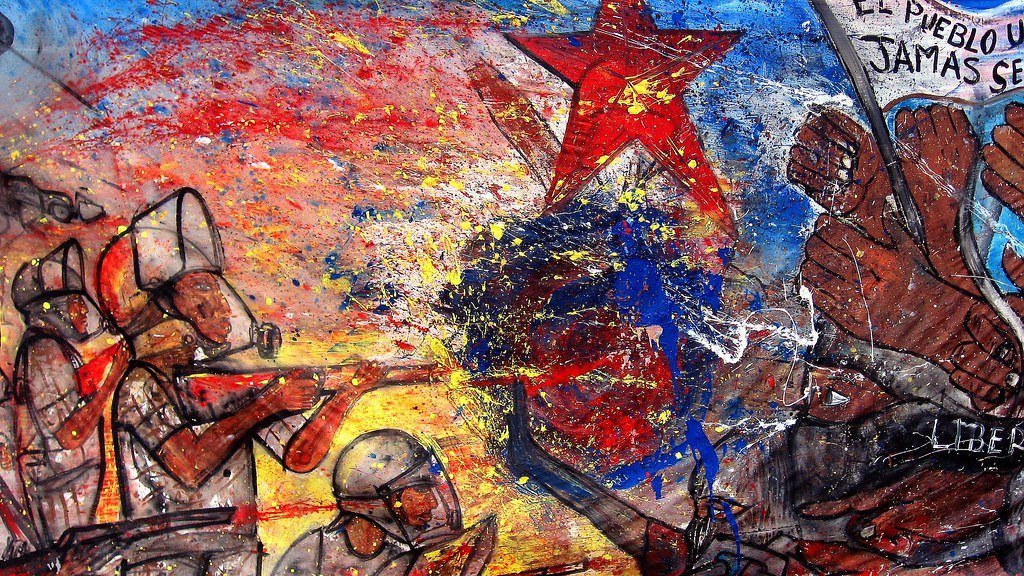
"'El pueblo unido jamás será vencido'" by 16:9clue is licensed under CC BY 2.0.

Radical Structures (2020-2021)
‘How does society need to change to compassionately support artists and communities more meaningfully?’
*
East Street Arts’ project, Radical Structures, aims to explore this question, one that (of course) has been asked and answered in myriad ways before.
We engaged with artists, arts workers, audiences and others with a stake in the cultural sector in 2021 – a time of great transition and intensity for us all – to highlight lessons from counter-cultures, anti-capitalist strategies and movements past and present that might benefit the sector today.
To read more, visit East Street Arts.
Towards an Intersectional Approach to Creative Writing (2018)
E M Forster’s now-famous distinction between flat and round characters has become a widely accepted feature of creative writing practice and pedagogy, and of literary analysis. In this thesis, Forster’s notion of roundness is a major point of departure, synthesised with the key features of intersectionality. Arising from its coinage in feminist legal theory, intersectionality appreciates identity as a matrix of simultaneous, mutually reinforcing points of privilege or marginalisation, for example, how Black women experience the double oppressions of racism and misogyny, or how class status complicates racial privilege. Intersectionality takes a particular interest in socially marginalised voices and the structures of dominance and oppression which maintain uneven social power dynamics.
An intersectional approach to creative writing can serve the aesthetic interests of a work by using the political dimension of characters’ lives to greater effect. Intersectionality can also challenge certain unspoken conventions in creative writing practice, such as the tendency to leave race – and particularly whiteness – unmarked, a move which passively reinforces the conflation of whiteness (and other normative identities) with the ‘universal’. This thesis explores four contemporary, US coming-of-age novels which confront or confound some of these conventions by making political subject positions (here we look at race, gender, class and sexuality) more visible and active in character and plot formation. The practical element of this thesis (Cygnet)demonstrates the execution of an intersectional approach.